BANT
Budget, authority, need, and timeline. Each one is marked found or still open, with the moment in the transcript that proves it.
After the call
Most deals do not fail on the call. They fail in the days after it: unwritten notes, unqualified gaps, a follow-up that never went out. Almanac closes each call with a structured debrief while the conversation is still warm.
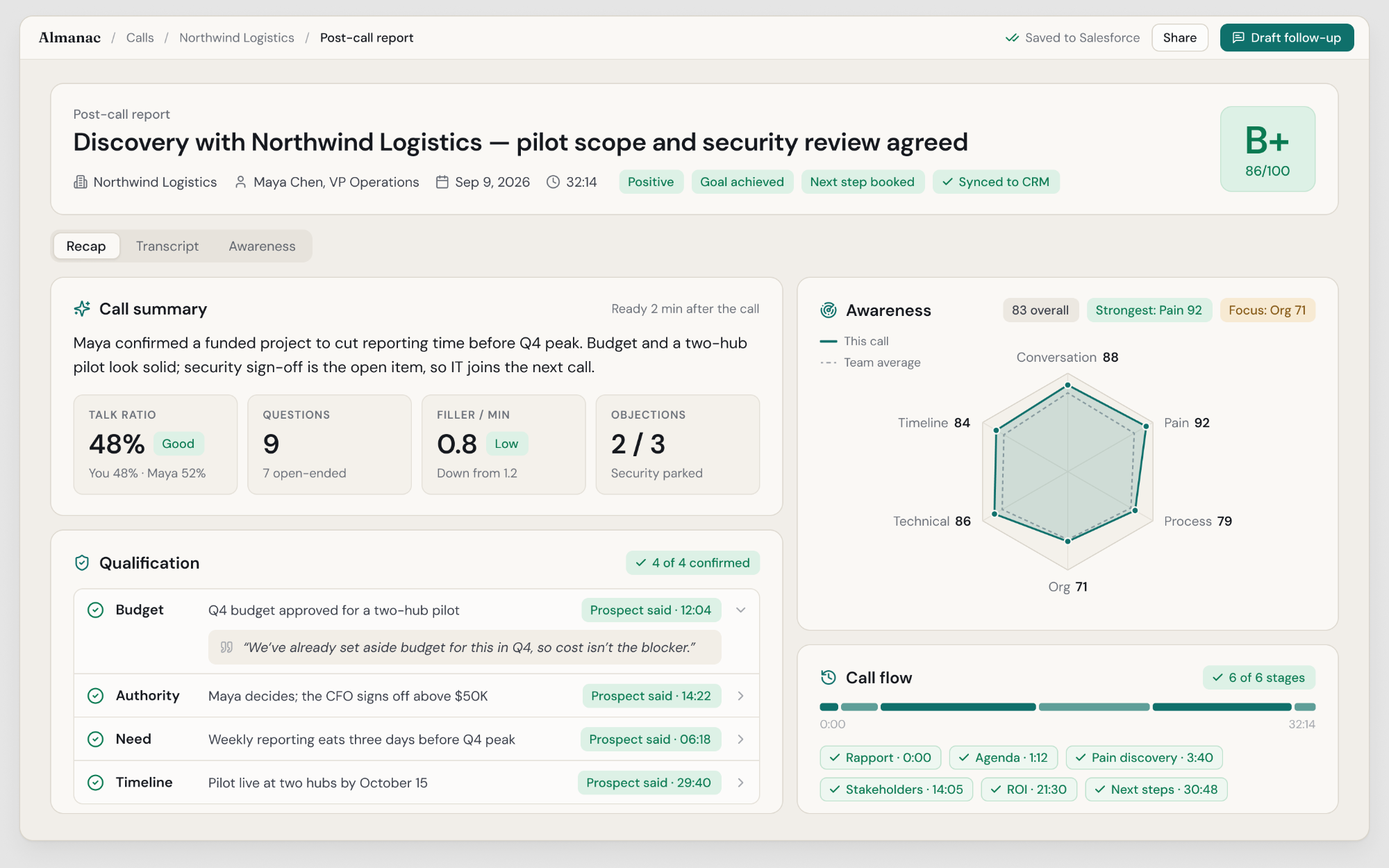
Awareness radar
The radar reads the call the way a good manager would: who did the talking, which topics got depth and which got dodged, who showed up engaged and who went quiet. Not a feeling, but a map of the conversation you can act on.
Radar note
"Security got 40 seconds and a subject change. If it matters to this deal, it hasn't been discussed yet."
A checkbox says the budget is confirmed. Almanac shows you the sentence where the prospect confirmed it, or it tells you the sentence does not exist. Run the framework your team already uses:
BANT
Budget, authority, need, and timeline. Each one is marked found or still open, with the moment in the transcript that proves it.
Three Why's
Why anything, why us, and why now. The narrative check that tells you whether this deal has a reason to close.
MEDDICC
Metrics through champion. The full enterprise checklist, filled from evidence and not from rep optimism.
Timeline · found
"We'd want this running before the new reps start in January." · 22:14
Economic buyer · still open
No moment in this call names who signs. Suggested for next call's objectives.
Follow-up
Almanac drafts the recap from what was actually said: the commitments made, the resources promised, the next step with its date. The rep edits and sends, instead of rebuilding the call from memory at 6pm.
Recap + next steps
"Thanks for the time today. As discussed: I'll send the security one-pager and 3 time slots for a working session with your RevOps team. You'll confirm who owns the procurement review by Thursday."
Handing a deal to another team usually means hours spent re-organizing what you know. Almanac generates the handoff document from the deal's full call history, scoped to exactly what that team needs to know, so they start where the last conversation ended.
To Customer success
What was promised, what the customer expects, and the context CS usually has to re-ask for on the kickoff call.
To Sales engineering
The technical questions raised, the environment described, and the claims an SE needs to verify before the deep dive.
To Leadership
Deal state on one page: qualification evidence, open risks, and what would move it. Nobody has to listen to a recording.