How Much Time Do Sales Reps Spend Selling? Less Than Half the Week
Sales reps spend about 40% of their time selling, up from 28% in 2022. Where the rest of the week goes, and how teams win more of it back.
Sales reps spend about 40% of their working time actually selling. That is the headline finding from Salesforce’s 2026 State of Sales report, which surveyed 4,050 sales professionals in 22 countries. The other 60% goes to everything around the sale: data entry, deal admin and the rest of the non-selling work. For the youngest reps, the share of time spent selling drops to 35%.
Put plainly, a rep with a 40-hour week spends about 16 hours with buyers. The rest of the week is the work that surrounds those 16 hours.
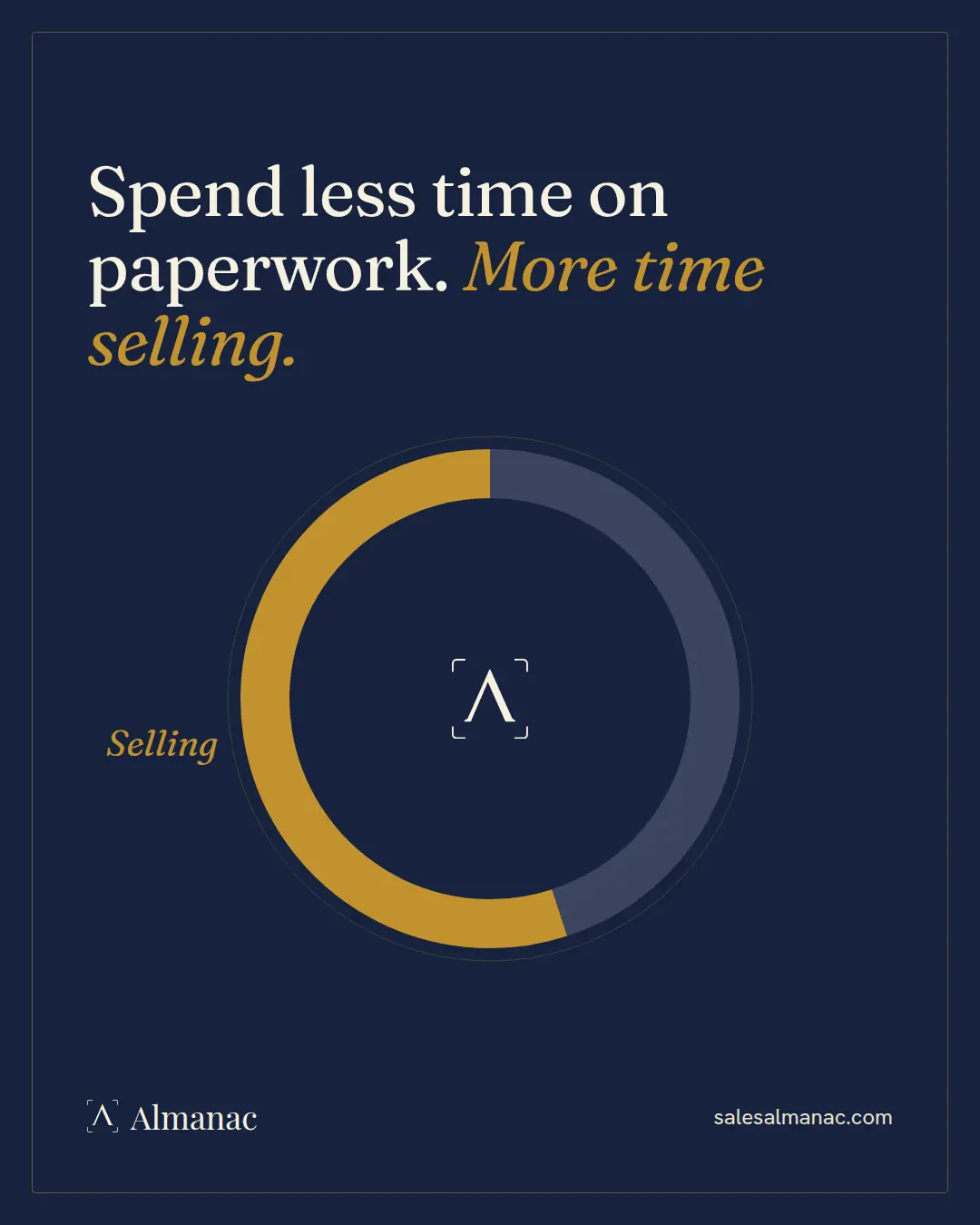
A ring of 40 hour-blocks, one for each hour of a work week. 16 blocks, or 40 percent, are gold: the time an average seller spends selling. The ring then folds into a Monday to Friday calendar, showing about 16 of 40 hours spent with buyers.
Source: Salesforce, State of Sales report (2026). Survey of 4,050 sales professionals, August to September 2025
How much time do sales reps actually spend selling?
Selling time is the share of a rep’s working hours spent in direct contact with buyers: calls, meetings, demos and the conversations that move a deal. By that measure, the average rep spends about 40% of the week selling in 2026.
The number has improved. Salesforce found reps selling 28% of the time in 2022 and 30% in 2024, before the jump to 40%. Not everyone shares the gain. Gen Z reps sit at 35%.
Bar chart. Reps spent 28 percent of their time selling in Salesforce's 2022 survey, 30 percent in 2024 and 40 percent in 2026. The chart then compares 2026's 40 percent for all sellers with 35 percent for Gen Z reps.
Source: Salesforce, State of Sales reports (2022, 2024, 2026). Each year surveyed a different group of sales professionals
HubSpot’s 2024 Sales Trends Report measured it a different way and landed in the same place: sales pros said they spend only about two hours a day actually selling. Different surveys, different years, one consistent picture. Most of a rep’s week is not spent selling.
Where does the rest of the week go?
The rest of the week goes to the work around the sale. Salesforce’s 2022 research found that deal management and data entry took up the majority of a rep’s time. In 2026, the clearest single drain it names is manual data entry.
None of this work is pointless. Notes need to be written. The CRM needs to be right. A follow-up email needs to go out. The problem is who does it, and when. Every hour a rep spends typing up yesterday’s call is an hour they are not on today’s.
It also compounds. The rep who is behind on admin walks into the next call less prepared. The call goes a little worse. The notes take a little longer. The cycle feeds itself.
Why selling time matters more than it used to
Selling time matters more because each conversation now carries more weight. HubSpot found 96% of prospects do their own research before talking to a sales rep. By the time a buyer agrees to a call, they expect it to be worth their time.
That makes the 40% the most valuable part of the week, for the business and for the rep. When HubSpot asked sales pros what they value most about the job, the answer was clear.
Two circles labeled most important part of selling and most enjoyable part of the job slide together. Their overlap fills gold: 82 percent of sales pros say building relationships is both.
Reps did not get into sales to update fields. The time they spend with buyers is the part of the job they say matters most, and the part they enjoy most. Protecting it is a retention issue as much as a revenue one.
Reps don’t need more hours. They need more of the hours they already have to be spent with buyers.
Why do newer reps spend even less time selling?
Newer reps spend less time selling because they carry more of the manual work and get less help with it. Salesforce found Gen Z reps spend 35% of their time selling, losing about two hours a week to manual data entry that senior reps spend researching prospects and building relationships.
The same report points to a support gap. Among Gen Z reps, 46% say they rarely get feedback on their sales conversations, and 47% say they don’t get enough roleplay before customer calls. They name a lack of manager time as their biggest obstacle.
That matters for the whole team, not just the newest hires. The months it takes a new rep to become productive are expensive. Our guide on how long it takes to ramp a sales rep puts numbers on it.
How can sales teams give reps more time to sell?
Teams give reps more selling time by removing work from the rep’s plate, not by asking for longer days. Four changes do most of the work.
- Measure a real week first. Ask a few reps to log one normal week in 30-minute blocks. The pattern is usually obvious, and it is usually not the one leadership expects.
- Take note-taking and follow-up off the rep. Call notes, CRM updates and the first draft of a follow-up email are the most repetitive tasks in the week. They are also the easiest to hand to software.
- Make preparation fast and repeatable. Good prep should take minutes, not an hour. A short, consistent routine, like this 10-minute pre-call research routine, beats a long one that only happens on big deals.
- Coach during the work, not after it. Feedback a week later competes with everything else on the calendar. Real-time sales coaching puts the guidance inside the conversation, where it costs the rep no extra time.
None of these require a reorganization. They require deciding that selling time is a resource worth protecting, then treating it like one.
Where Almanac fits
We built Almanac around those hours. Before a call, Almanac builds a short brief, so preparation takes minutes. During the call, it puts answers from your team’s playbook on the rep’s screen, so they never have to stop and search. After the call, it writes a scored debrief and drafts the follow-up email, so the admin is done before the next meeting starts.
The goal is simple: more of the rep’s week spent with buyers, and better conversations when they are.
Frequently asked questions
What percentage of time do sales reps spend selling?
About 40%, according to Salesforce’s 2026 State of Sales report, which surveyed 4,050 sales professionals in 2025. Earlier editions found 28% (2022) and 30% (2024). Gen Z reps spend 35% of their time selling.
What do sales reps spend the rest of their time on?
Mostly the work around the sale: data entry, deal management and other administrative tasks. Salesforce found deal management and data entry took up the majority of reps’ time in 2022, and in 2026 it names manual data entry as a major drain, especially for newer reps.
How many hours a day do sales reps actually sell?
HubSpot’s 2024 Sales Trends Report found sales pros spend only about two hours a day actually selling. Salesforce’s 40% figure works out to roughly 16 hours in a 40-hour week.
How can a sales manager increase selling time?
Start by measuring a real week. Then remove the most repetitive work, such as call notes, CRM updates and follow-up drafts, make preparation quick and consistent, and coach during calls rather than days later.